Product · MBA · 2024
Dress Up
Product Designer · MBA Project
2024 · Columbia Business School
Semester-long product innovation course
Dress Up is a smart wardrobe platform designed during an MBA product innovation course. It digitizes users' closets and recommends daily outfits using AI-driven logic — tackling overconsumption and wardrobe underutilization in sustainable fashion.
What needed solving
Consumers often overconsume while underutilizing clothes they already own. Existing wardrobe apps focus on cataloging, not on daily decision-making or sustainable behavior change.
research & validation
The most important creative work happens before getting dressed — understanding what people own and why they repeat the same outfits.
- Conducted 50 user interviews to map wardrobe pain points — decision fatigue, forgotten items, and guilt around overconsumption.
- Validated demand with 100+ expressions of interest from target users during concept testing.
- Studied competitor apps and identified gaps: weak outfit recommendation logic and no sustainability framing.
- Mapped user journeys from morning routine triggers to outfit selection and social sharing moments.
design process
- Defined core flows: onboarding, wardrobe digitization via camera, AI outfit recommendations, and sustainable style education.
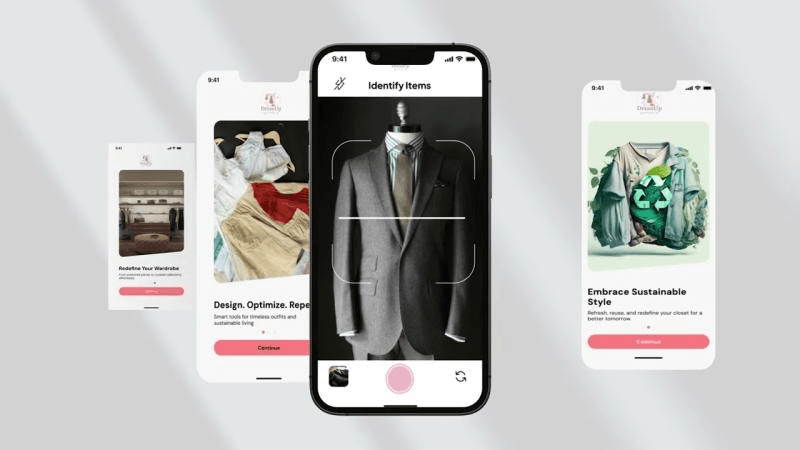
- Sketched wireframes in Figma for the 'Identify Items' camera feature with scan-frame UX for clothing recognition.
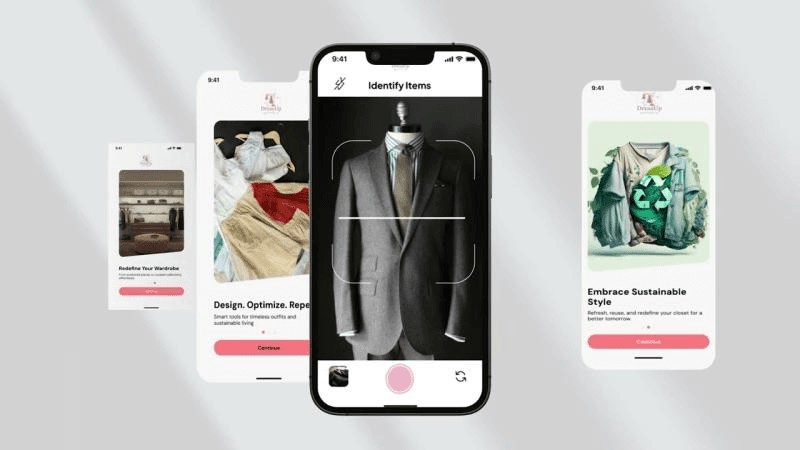
- Designed onboarding screens with brand identity — 'Design. Optimize. Repeat' and 'Embrace Sustainable Style' messaging.
- Built interactive dashboards in Power BI to visualize outfit usage patterns and user behavior insights.
- Created a go-to-market strategy centered on personalization, sustainability, and affordability.
design strategy
Make sustainability feel effortless — not like a sacrifice, but like a smarter way to get dressed.
- Used warm coral accents and soft photography to make the app feel approachable, not clinical.
- Designed the camera-first 'Identify Items' flow as the hero interaction — reducing friction to add clothes.
- Structured onboarding as a narrative arc: redefine your wardrobe → optimize daily choices → embrace sustainable style.
- Paired mobile UX with data dashboards so business stakeholders could track engagement and usage patterns.
solution
- A mobile app with camera-based clothing identification, digital wardrobe management, and AI outfit recommendations.
- Multi-screen onboarding flow with sustainability messaging and clear value propositions.
- Power BI dashboards tracking outfit usage frequency, category breakdowns, and user retention signals.
- MVP wireframes and interactive prototypes ready for user testing and investor presentations.
App screens & prototypes
Onboarding flows, camera-based wardrobe digitization, and social profile screens — each tied to the research and design decisions behind Dress Up.
Onboarding
Onboarding overview
Three-screen onboarding arc introducing wardrobe digitization, daily outfit optimization, and sustainable style messaging.
view strategy section →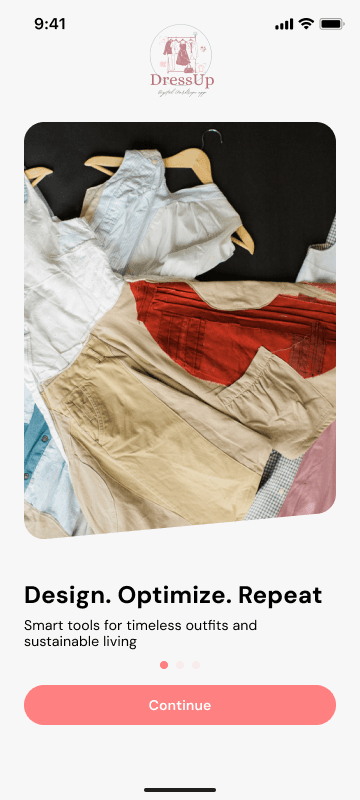
Onboarding
Design. Optimize. Repeat.
Landing screen pairing flat-lay photography with a clear value proposition for timeless, sustainable outfit planning.
view strategy section →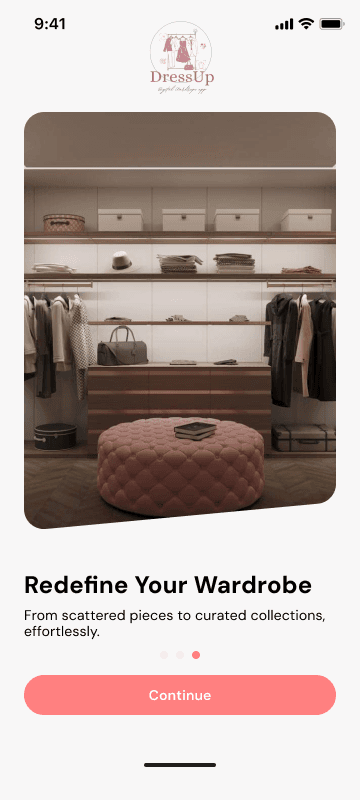
Onboarding
Redefine Your Wardrobe
Second onboarding screen reframing scattered clothing into curated collections — the emotional hook before feature walkthrough.
view research section →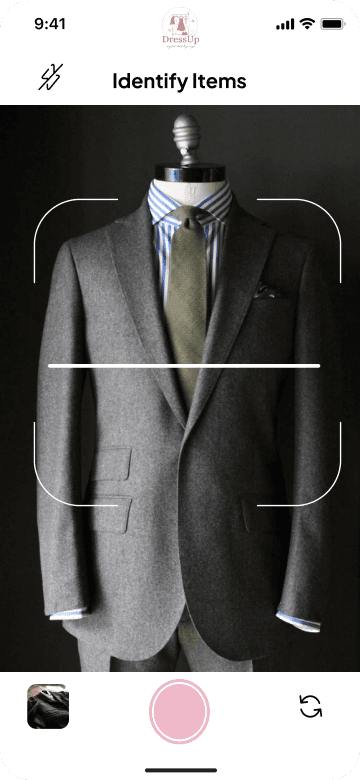
Core feature
Identify Items — camera flow
Camera-first UX with scan-frame overlay for clothing recognition — designed to reduce friction when adding items to a digital wardrobe.
view process section →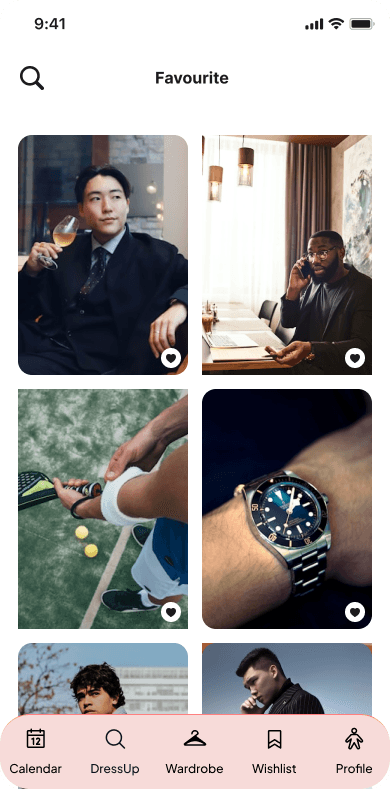
Social & discovery
Favourite — style inspiration
Grid-based discovery feed surfacing high-end fashion photography and lifestyle content to inspire daily outfit choices.
view solution section →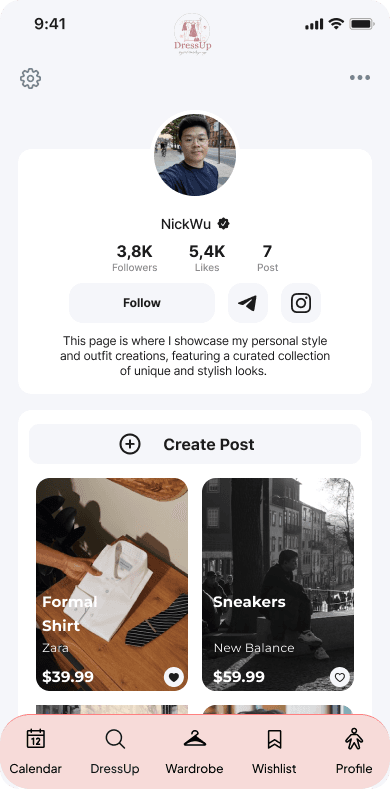
Social & discovery
Profile & community
User profile with follower metrics, social links, and a personal post grid — supporting the sharing and community layer of the platform.
view solution section →Impact & results
- 50 user interviews validating core wardrobe pain points.
- 100+ expressions of interest during concept validation.
- Full MVP wireframes and interactive prototypes in Figma.
- Data-driven dashboards for tracking user behavior and outfit patterns.